How to Make Pasta from Scratch: Silky Four-Egg Fresh Noodles
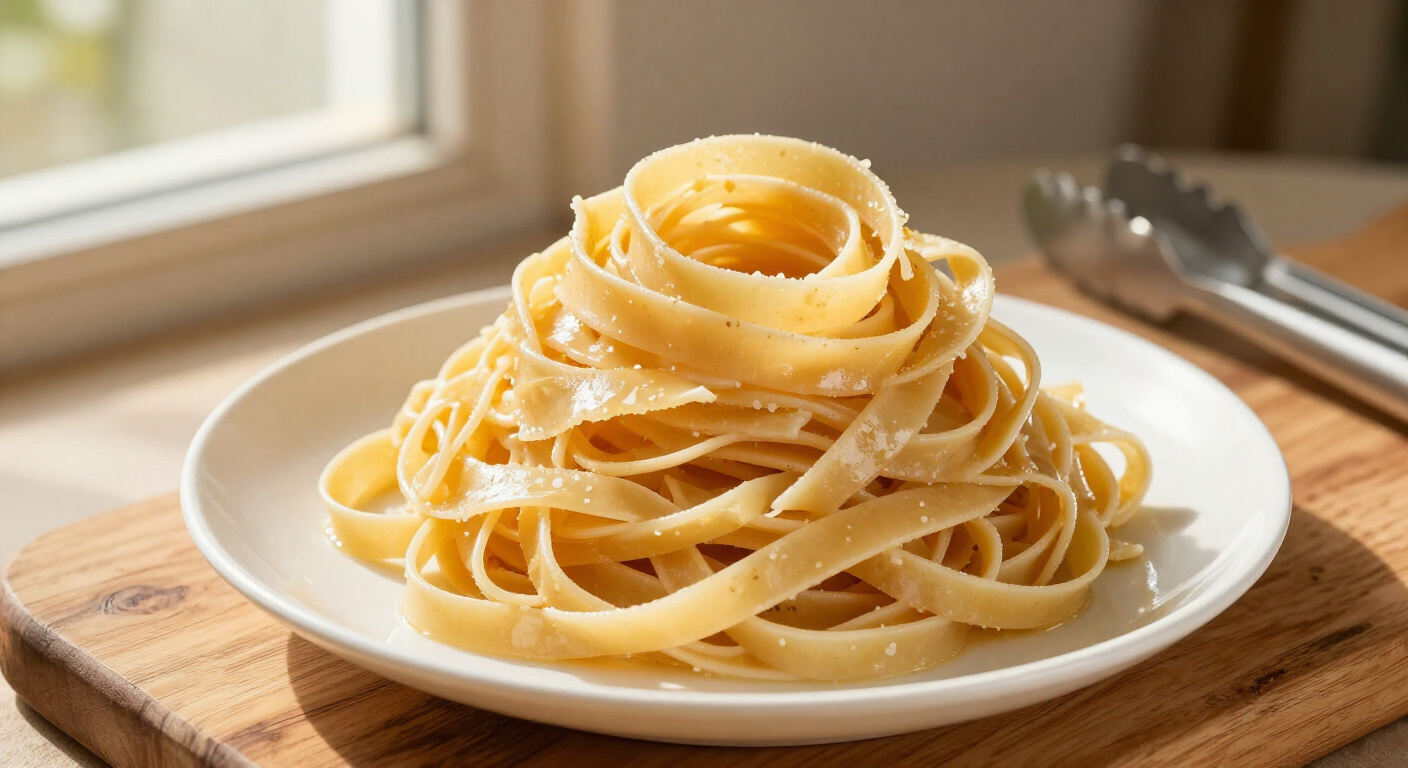
How to make pasta from scratch in 64 minutes: just 00 flour, four eggs and your hands for silky golden ribbons with a tender chew. Grab a board.
Learning how to make pasta takes just 64 minutes, and you'll lift silky, golden ribbons with a tender chew off the tongs. No machine, no fuss, just your hands, so save it for Sunday dinner with a hungry crowd.
Room-temperature eggs blend into the 00 flour faster, and a 30-minute rest relaxes the gluten, so your dough rolls thin enough to see the wood grain without springing back.
Ingredients You'll Need
00 Flour: This is Italy's finest-milled flour, soft as talc and pale as fresh cream. It gives you a silky, tender noodle that still holds a gentle chew. You'll also dust the board and the ribbons with it, so keep the bag close. No 00? All-purpose flour works fine, and the noodles just come out a touch more rustic.
Large Eggs: These are the only liquid in this dough, so they do all the heavy lifting. They bring richness, a sunny golden color and the structure that keeps your ribbons from tearing. Let them sit out until room temperature, because cold eggs fight the flour. No eggs at home? Swap in about 1 cup of warm water plus a splash of olive oil, and expect a paler, leaner noodle.
Kosher Salt: These coarse, flaky crystals season the dough lightly and the cooking water boldly. A pinch in the well wakes up the eggs. A big handful in the pot makes the water taste like the sea, which flavors every strand from the inside. Use fine sea salt if that's what you've got, but cut the amount roughly in half.


How to Make It (Step by Step)
It all happens by hand on one floured wooden board, then the golden ribbons take a quick tumble in boiling salty water.
Even if you've never made pasta from scratch, trust me, that first silky twirl off the tongs will be yours.

- Pour the 00 flour into a wide mound on a big wooden board, then scoop a deep well in the center. Sprinkle in ½ teaspoon of kosher salt and crack all four eggs into the well. Work until the walls stand tall and the yolks sit glossy and contained, 2-3 minutes at room temperature (70°F / 21°C). Warm eggs blend best, so don't skip that part.

- Beat the eggs with a fork, pulling flour from the inner walls a little at a time. Keep going until a shaggy, crumbly dough clumps together, 4-6 minutes at room temperature (70°F / 21°C). Messy is perfect here. Trust me.

- Knead the dough with the heel of your hand, pushing forward and folding back. Work until it turns smooth and satiny and springs back when poked, 8-10 minutes at room temperature (70°F / 21°C). Your arms will feel it. Good.

- Wrap the dough tightly in plastic wrap and let it rest on the counter. Wait until it feels soft, relaxed and pliable under a gentle press, 30 minutes at room temperature (70°F / 21°C). Go pour yourself a coffee.

- Dust the board with flour and roll the dough out with a rolling pin, turning it often. Roll until the sheet is thin enough to see the wood grain through it, 8-10 minutes at room temperature (70°F / 21°C). Dust as you go so it never sticks.

- Flour the sheet well, fold it loosely into a flat roll, and slice it into ¼-inch ribbons with a sharp knife. Shake the ribbons loose and toss them with more flour. Twirl them into nests until each strand looks dry and separate, about 5 minutes at room temperature (70°F / 21°C).

- Fill a big stockpot with water and bring it up over high heat. Toss in the remaining kosher salt once it's going. Wait until it hits a loud, rolling boil you can't stir down, 10-12 minutes at 212°F / 100°C. It should taste like the sea.

- Shake the extra flour off the nests and drop the noodles into the pot. Stir once so nothing clumps. Cook until they float, turn tender and keep a slight chew, 2-4 minutes at 212°F / 100°C. Lift the first twirl with tongs. Someone at your counter is waiting for it.

Fresh nests keep two days in the fridge or a month in the freezer. Cook them straight from frozen, no thawing, and just add an extra minute.
Serving size: 1 portion · Calories: 380 · Total Fat: 6g · Saturated Fat: 2g · Carbs: 65g · Fiber: 2g · Sugar: 1g · Protein: 17g · Sodium: 390mg
Tips and Tricks
- Equipment: Use a big wooden board and a long rolling pin. Wood grips the flour and keeps your well steady. Its gentle texture also helps the dough stretch without sliding around. When you can see the grain through the sheet, you know it's thin enough. Marble and steel are too slick and too cold for this job.

- Temperature precision: Wait for a full 212°F rolling boil. Don't drop the noodles at a lazy simmer. You want a loud, rolling boil that keeps going when you stir. Fresh pasta needs that heat to set the surface in seconds. Otherwise it turns gummy and glues itself together.
- Common mistake: Pulling in the flour too fast. First-timers knock the walls down early, and the eggs flood across the board. Nibble flour from the inner walls a little at a time with your fork. Keep the outer wall tall until the center turns thick and pasty.
- Flavour upgrade: Finish with butter and pasta water. This is optional, but oh, it's worth it. Lift the hot noodles straight into a pan with a knob of butter and a splash of the salty cooking water. Toss until everything turns glossy and velvety.
- Texture tip: Flour the ribbons like you mean it. Silky, separate strands start right after you slice. Shake the ¼-inch ribbons loose and toss them with plenty of 00 flour. Then twirl them into loose nests and let them sit until each strand feels dry to the touch.

Frequently Asked Questions
Can I make pasta from scratch without eggs for a vegan or egg-free diet?
Yes, swap the 4 eggs for ¾ cup plus 1 tablespoon (195 ml) warm water and 1 tablespoon olive oil, keeping the same 3 cups of 00 flour. The noodles come out paler and a bit chewier, so add water a teaspoon at a time if the dough cracks.
How do I store and reheat leftover cooked fresh pasta noodles?
Toss the cooked noodles with a little olive oil, seal them airtight, and refrigerate up to 3 days or freeze up to 1 month. Reheat in a skillet over medium heat with a splash of water or sauce, tossing with tongs 2-3 minutes until hot and glossy.
Why does my pasta dough keep cracking and crumbling when I knead it?
The dough is too dry, so wet your hands and knead in water a teaspoon at a time until it holds together without tearing. Keep going until it turns smooth and satiny and springs back when you poke it.
What to Serve With This
- Lemony Arugula Salad: Peppery leaves and a sharp squeeze of lemon cut right through those rich, eggy ribbons.
- Charred Garlic Broccolini: Smoky, crisp-tender stalks give a snappy bite against the soft, silky noodles.
- Blistered Cherry Tomatoes: Sweet, juicy, bursting tomatoes bring a bright, tangy pop to the golden pasta.
- Sautéed Spinach with Garlic: Silky, fragrant greens add an earthy, slightly bitter edge that keeps every forkful fresh.

How to Make Pasta from Scratch: Silky Four-Egg Fresh Noodles
Dinner / Italian
- Prep
- 1 h
- Cook
- 4 min
- Total
- 1 h 4 min
- Servings
- 4
- Calories
- 380 kcal
Ingredients
- 3 cups (400 g) 00 flour, plus extra for dusting the board and the noodles
- 4 large eggs, room temperature
- 2½ tablespoons kosher salt, ½ teaspoon for the dough and the rest for the pasta water
Instructions
- Pour the 00 flour into a wide mound on a big wooden board, then scoop a deep well in the center. Sprinkle in ½ teaspoon of kosher salt and crack all four eggs into the well. Work until the walls stand tall and the yolks sit glossy and contained, 2-3 minutes at room temperature (70°F / 21°C). Warm eggs blend best, so don't skip that part.
- Beat the eggs with a fork, pulling flour from the inner walls a little at a time. Keep going until a shaggy, crumbly dough clumps together, 4-6 minutes at room temperature (70°F / 21°C). Messy is perfect here. Trust me.
- Knead the dough with the heel of your hand, pushing forward and folding back. Work until it turns smooth and satiny and springs back when poked, 8-10 minutes at room temperature (70°F / 21°C). Your arms will feel it. Good.
- Wrap the dough tightly in plastic wrap and let it rest on the counter. Wait until it feels soft, relaxed and pliable under a gentle press, 30 minutes at room temperature (70°F / 21°C). Go pour yourself a coffee.
- Dust the board with flour and roll the dough out with a rolling pin, turning it often. Roll until the sheet is thin enough to see the wood grain through it, 8-10 minutes at room temperature (70°F / 21°C). Dust as you go so it never sticks.
- Flour the sheet well, fold it loosely into a flat roll, and slice it into ¼-inch ribbons with a sharp knife. Shake the ribbons loose and toss them with more flour. Twirl them into nests until each strand looks dry and separate, about 5 minutes at room temperature (70°F / 21°C).
- Fill a big stockpot with water and bring it up over high heat. Toss in the remaining kosher salt once it's going. Wait until it hits a loud, rolling boil you can't stir down, 10-12 minutes at 212°F / 100°C. It should taste like the sea.
- Shake the extra flour off the nests and drop the noodles into the pot. Stir once so nothing clumps. Cook until they float, turn tender and keep a slight chew, 2-4 minutes at 212°F / 100°C. Lift the first twirl with tongs. Someone at your counter is waiting for it.
Share this article
About the author
Rosa Caruso
Rosa has fed this Brooklyn kitchen for forty years, through two funerals, three weddings and one flood. Her husband still sits at the counter every night waiting for the first twirl off the tongs, and she still loves him for it. She cooks pasta the way she loves: loudly, generously and without apology.